
What Is Skin Barrier and Its Role in Aging
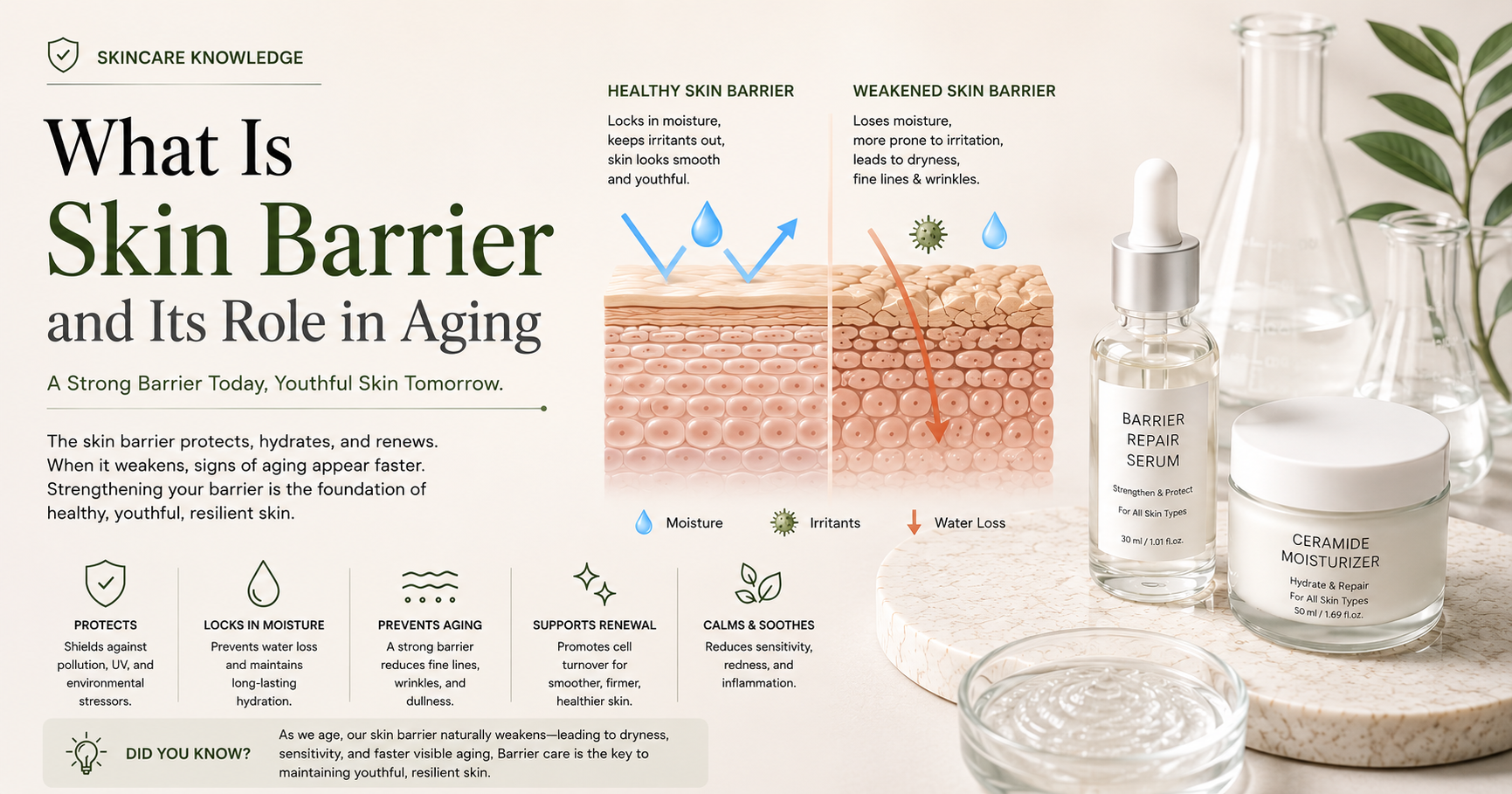
The skin barrier is the outermost protective layer of your skin that prevents moisture loss and blocks environmental damage—and maintaining its integrity is one of the most effective ways to prevent premature aging.
When this barrier weakens with age, it triggers a cascade of visible aging signs including wrinkles, dehydration, and loss of firmness.
Understanding how the skin barrier functions and deteriorates is essential for anyone seeking effective anti-aging skincare.
1. What Is the Skin Barrier
The skin barrier, scientifically called the stratum corneum, is a protective wall made of dead skin cells bound together by essential lipids that keeps moisture in and harmful substances out.
This structure resembles a brick wall: skin cells (corneocytes) act as “bricks” while lipids—primarily ceramides, cholesterol, and fatty acids—serve as the “mortar” holding everything together. This precise architecture creates a selective barrier that maintains optimal skin function.
The barrier performs two critical functions simultaneously. First, it prevents transepidermal water loss (TEWL), keeping your skin hydrated from within. Second, it blocks external threats including pollutants, bacteria, allergens, and UV radiation from penetrating deeper skin layers.
A healthy skin barrier appears smooth, stays properly hydrated, and responds resiliently to environmental stress, while a compromised barrier becomes permeable, leading to dehydration, sensitivity, and accelerated aging.
2. Why the Skin Barrier Is Critical for Healthy Skin
Barrier integrity directly determines your skin’s ability to stay hydrated, defend against environmental damage, and maintain the stable conditions necessary for healthy cellular function.
A. Moisture Retention and Hydration
The lipid matrix within your skin barrier creates a seal that prevents excessive water evaporation. Without this protection, your skin would lose moisture at rates incompatible with maintaining cellular health and structural integrity.
Even minor barrier disruption can increase water loss by 50-75%, triggering compensatory responses that often worsen the underlying problem. This affects not just surface appearance but also enzymatic activity, cellular communication, and the skin’s natural repair mechanisms.
Natural moisturizing factors (NMFs) within the stratum corneum work synergistically with barrier lipids to attract and retain water—but they cannot compensate for structural barrier breakdown.
B. Protection Against Environmental Aggressors
Your skin barrier provides continuous defense against UV radiation, pollution particles, allergens, bacteria, viruses, and chemical irritants. This protection operates automatically, adapting to environmental challenges throughout the day.
Pollutants like PM2.5 and heavy metals penetrate compromised barriers, generating oxidative stress that damages cellular DNA and accelerates aging. A robust barrier physically blocks these particles while supporting the skin’s antioxidant defense systems.
The barrier’s slightly acidic pH (4.5-5.5) creates an “acid mantle” that inhibits harmful bacterial growth while supporting beneficial skin microbiome balance. This antimicrobial property is integral to barrier function, not separate from it.
C. Foundation for Skin Stability
A healthy skin barrier maintains optimal conditions for cellular renewal, immune function, and enzymatic processes that keep skin functioning properly at every level.
Barrier integrity directly influences desquamation—the controlled shedding of dead skin cells—which must occur at precise rates to maintain appropriate skin thickness and texture. When this process becomes dysregulated, skin appears rough, flaky, or congested.
Barrier dysfunction triggers inflammatory signaling pathways that can become chronic, creating a self-perpetuating cycle of damage and impaired healing. This inflammation extends beyond the epidermis into the dermis, where it affects collagen and elastin production.
3. How Aging Weakens the Skin Barrier
Aging systematically compromises skin barrier function through three interconnected mechanisms: declining lipid production, reduced repair capacity, and cumulative environmental damage.
A. Declining Barrier Lipid Levels
Ceramide levels decrease by up to 40% between ages 30 and 80, fundamentally altering barrier composition and integrity. This reduction affects both quantity and quality—the specific ceramide profiles shift toward less effective variants that cannot maintain proper barrier cohesion.
Cholesterol and free fatty acid levels similarly decline, disrupting the precise 1:1:1 ratio of ceramides:cholesterol:fatty acids that characterizes optimal barrier function. These imbalances create microscopic gaps in the lipid matrix, increasing permeability to both water loss and external irritants.
The enzymes responsible for synthesizing barrier lipids show reduced activity with advancing age, meaning skin loses lipids faster while producing replacements more slowly.
Hormonal changes, particularly declining estrogen during menopause, accelerate lipid depletion and reduce sebum production. These shifts can trigger sudden barrier deterioration that manifests as increased dryness, sensitivity, and visible aging within relatively short timeframes.
B. Reduced Repair and Recovery Capacity
Young skin repairs barrier damage within 24-48 hours; aged skin may require 72 hours or longer for equivalent recovery. This delayed repair leaves skin vulnerable for extended periods during which cumulative damage accelerates.
The cellular mechanisms underlying barrier repair—keratinocyte proliferation, lipid synthesis, and lamellar body secretion—all become less efficient with age. Growth factors and signaling molecules that coordinate these processes decline in both concentration and effectiveness.
Cell turnover slows significantly: what was a 28-day renewal cycle in youth may extend to 45-60 days in mature skin. Damaged corneocytes remain in the stratum corneum longer, contributing to rough texture and impaired barrier performance.
C. Visible Manifestations of Barrier Weakening
Barrier deterioration directly causes the hallmark complaints of aging skin: persistent dryness despite moisturizer use, heightened sensitivity to previously tolerated products, and increased fragility with delayed wound healing.
Transepidermal water loss can double in aged skin compared to young skin, creating chronic dehydration that affects both appearance and cellular function. This moisture deficit contributes directly to fine lines, rough texture, and diminished radiance.
Thinning of the stratum corneum means aged skin has less physical cushioning and resilience. Minor trauma that young skin would handle without consequence can tear or bruise aged skin, demonstrating compromised structural integrity.
The weakened barrier allows greater penetration of irritants and allergens, triggering inflammatory responses that manifest as redness, stinging, itching, and visible sensitivity—creating the frustrating situation where skin needs treatment but tolerates fewer products.
4. Relationship Between Barrier Damage and Aging
Barrier dysfunction doesn’t just reflect aging—it actively accelerates the aging process through inflammation, oxidative stress, and structural degradation.
A. How Barrier Compromise Accelerates Visible Aging
Barrier dysfunction initiates inflammatory cascades that activate matrix metalloproteinases (MMPs)—enzymes that break down collagen and elastin in the dermis. This creates a direct pathway through which surface barrier damage accelerates deep structural aging.
Chronic low-grade inflammation from barrier impairment, termed “inflammaging,” perpetuates oxidative stress throughout skin layers. This sustained inflammatory state accelerates telomere shortening and cellular senescence, fundamental markers of biological aging.
When the barrier fails to adequately block UV radiation and pollutants, these damaging agents penetrate more deeply, generating reactive oxygen species that damage DNA, proteins, and lipids at accelerated rates.
Dehydration from barrier dysfunction immediately accentuates fine lines and wrinkles while also impairing the cellular processes required for collagen synthesis and tissue repair. Chronically dehydrated skin ages faster at both the visible and cellular level.
B. The Self-Perpetuating Cycle of Deterioration
Barrier damage triggers inflammatory signaling that further disrupts barrier lipid production, creating a self-reinforcing cycle. Pro-inflammatory cytokines like IL-1α and TNF-α actively inhibit ceramide synthesis and other essential barrier components.
Dehydration from increased water loss alters the ionic environment within skin cells, affecting enzymatic function and gene expression. These changes promote catabolic processes (breakdown) over anabolic processes (building), shifting the balance toward tissue degradation.
The visible consequences—sagging, wrinkles, uneven texture, enlarged pores, and dullness—reflect underlying biological deterioration that begins with barrier compromise.
C. Barrier Maintenance as Aging Prevention
Maintaining robust barrier function throughout life is one of the most effective strategies for preventing premature skin aging and preserving youthful characteristics.
Population studies consistently show that individuals with healthy barrier function display fewer signs of aging compared to same-age peers with compromised barriers. A well-maintained barrier can reduce photoaging severity by 30-50% compared to compromised skin exposed to identical UV doses.
Barrier-focused interventions demonstrate measurable anti-aging benefits within 4-12 weeks, including improved hydration, reduced fine lines, enhanced firmness, and more even tone. These improvements reflect both immediate barrier repair and downstream effects on dermal structures.
Prevention is significantly more effective than attempting repair after chronic compromise—supporting the importance of gentle, barrier-protective skincare throughout all life stages, not just when visible aging appears.
5. How to Repair and Strengthen the Skin Barrier
Effective barrier repair requires a comprehensive approach that eliminates damaging practices while actively replenishing essential components.
A. Gentle Cleansing Practices
Over-cleansing strips essential lipids and disrupts the acid mantle—limit cleansing to once daily (evening) or use gentle, pH-balanced cleansers that preserve natural protective elements.
Harsh surfactants like sodium lauryl sulfate (SLS) create immediate barrier disruption measurable as increased water loss within minutes of use. Switch to mild cleansers containing fatty acid-based surfactants or cleansing oils that clean effectively without stripping.
Water temperature matters significantly. Hot water accelerates lipid removal and increases skin permeability, while lukewarm water cleanses effectively with minimal disruption. This simple modification can substantially impact barrier health over time.
Avoid products containing high concentrations of alcohol, fragrance, and essential oils, which disrupt barrier lipids and trigger inflammation. Even “natural” ingredients can be harsh—barrier compatibility matters more than ingredient origin.
B. Strategic Hydration and Moisture Balance
Effective barrier repair requires both water (hydration) and lipids (moisture), delivered through humectants that attract water and occlusives that prevent its loss.
Humectants for Hydration
Humectants like hyaluronic acid, glycerin, and urea draw water into the stratum corneum, temporarily improving hydration and supporting the enzymatic processes essential for barrier lipid synthesis. These ingredients work optimally when layered under occlusives.
Lipids for Barrier Reconstruction
Occlusives and emollients—including ceramides, cholesterol, fatty acids, squalane, and plant oils—replenish barrier lipids and create a protective seal reducing water loss. Formulations mimicking the natural 1:1:1 ceramide:cholesterol:fatty acid ratio show superior barrier repair compared to single-lipid products.
Active Barrier-Boosting Ingredients
Niacinamide (vitamin B3) uniquely stimulates endogenous ceramide synthesis, effectively teaching skin to improve its own barrier function. Clinical studies demonstrate 20-40% increases in barrier lipids with consistent niacinamide use over 4-8 weeks.
C. Controlled Exfoliation Approach
While exfoliation removes accumulated dead cells and improves product penetration, excessive exfoliation thins the stratum corneum and disrupts barrier architecture.
The skin barrier requires adequate thickness to function properly. Over-enthusiastic exfoliation removes protective layers faster than they regenerate, creating chronic barrier compromise. Many people unknowingly over-exfoliate by combining multiple methods—physical scrubs, AHA/BHA products, retinoids, and exfoliating devices.
For barrier-compromised or aging skin, limit exfoliation to 1-2 times weekly with gentle methods, allowing adequate recovery time between treatments.
Signs of over-exfoliation include tightness immediately after washing, stinging upon product application, persistent redness, and increased sensitivity. If these occur, suspend all exfoliation for 2-4 weeks to allow barrier recovery.
D. Essential Supporting Strategies
Sun Protection
UV radiation degrades barrier lipids, impairs repair mechanisms, and generates oxidative stress. Daily broad-spectrum SPF 30+ is non-negotiable for barrier health and prevents cumulative damage.
Antioxidant Support
Vitamins C and E, ferulic acid, resveratrol, and green tea polyphenols neutralize free radicals before they damage barrier components. These work synergistically with physical barrier repair ingredients.
Lifestyle Factors
Adequate sleep and stress management support barrier function through hormonal and immune pathways. Studies show sleep deprivation impairs barrier recovery by 30% and increases susceptibility to irritants.
6. Barrier Repair vs Anti-Aging: How They Work Together
Barrier integrity is the non-negotiable foundation upon which all anti-aging interventions build—no treatment can perform optimally on barrier-compromised skin.
A. Barrier Repair as the Foundation
Attempting aggressive anti-aging treatments on damaged barriers often worsens both barrier function and visible aging. This fundamental principle is increasingly recognized in dermatological practice.
Retinoids, the gold-standard anti-aging ingredient, require barrier support to deliver benefits without excessive irritation. A compromised barrier allows irregular retinoid penetration, causing inflammation that counteracts anti-aging effects while further damaging the barrier.
Vitamin C, peptides, and growth factors penetrate more predictably and work more effectively when applied to intact barrier skin.
Clinical protocols increasingly recommend a “barrier-first” approach: establish healthy barrier function before introducing potent actives, then maintain barrier support while using anti-aging ingredients. This sequencing delivers superior results with fewer adverse effects.
B. Anti-Aging as Enhancement
Once barrier integrity is established, targeted anti-aging ingredients can work synergistically with barrier repair to address specific aging concerns. This relationship is complementary, not competitive.
Overlapping Mechanisms
Barrier repair ingredients like ceramides and niacinamide don’t merely support the barrier—they actively combat aging through anti-inflammatory, hydration-dependent, and lipid-mediated pathways. The distinction between “barrier repair” and “anti-aging” categories oversimplifies their overlapping mechanisms.
When the barrier functions properly, it optimizes the microenvironment for fibroblast activity, collagen synthesis, and cellular renewal in deeper skin layers. This means barrier repair indirectly enhances endogenous anti-aging processes.
Hydration maintained by intact barrier function influences gene expression patterns, upregulating collagen production and downregulating matrix-degrading enzymes. These molecular changes translate to measurable improvements in skin thickness, elasticity, and firmness.
C. Building an Integrated Routine
A comprehensive anti-aging routine layers barrier repair with targeted actives: barrier-supportive cleansing, hydrating layers, then actives, sealed with barrier-repairing moisturizer.
Morning Protocol
Prioritize barrier protection through antioxidants and broad-spectrum sunscreen. This prevents the daily damage that compromises both barrier function and structural integrity.
Evening Protocol
Incorporate barrier repair with gentle active ingredients. This aligns with skin’s natural nighttime repair cycles when cellular renewal peaks.
Introducing New Actives
When adding potent anti-aging ingredients like retinoids or acids, simultaneously strengthen barrier support to prevent the irritation that often causes treatment abandonment. Tolerability determines consistency, which determines results.
Professional Treatment Support
Professional treatments—peels, microneedling, laser procedures—temporarily compromise the barrier to trigger renewal responses. Post-treatment barrier repair protocols are essential for optimal healing, results, and prevention of complications like post-inflammatory hyperpigmentation.
Conclusion
Barrier protection and repair represent among the most powerful anti-aging interventions available, making barrier-first skincare the logical foundation for any effective anti-aging strategy.
The most effective anti-aging skincare treats barrier repair not as an alternative to anti-aging treatment, but as the essential foundation that allows all other interventions to work optimally. Healthy barrier function today is your most reliable investment in youthful skin tomorrow.
Anti-Aging Research Center
You May Also Like


Develop Your Skincare Products
Looking to launch your own skincare line? Our experienced team can support you through every stage of the development process. From custom formulation and ingredient selection to packaging and full-scale manufacturing, we provide complete OEM and private label solutions tailored to your brand.
