
Consumer Demand for Sensitive Skin Products

1. Why Sensitive Skin Products Are in Demand
The sensitive skin skincare market has shifted from a niche segment to a mainstream category. Multiple converging factors are driving unprecedented consumer demand for gentle, low-irritation formulations.
Rising Number of Consumers with Sensitive Skin
Recent market studies indicate that over 70% of consumers globally self-identify as having sensitive or reactive skin at some point. This dramatic increase reflects both genuine physiological changes and heightened consumer awareness of skin sensitivity symptoms.
Key drivers include:
- Self-diagnosis becoming more common through online skincare communities
- Greater awareness of sensitivity symptoms like redness, tightness, and irritation
- Expanding definition of “sensitive skin” beyond clinical dermatological conditions
- Cross-generational concern spanning Gen Z through Baby Boomers
Overuse of Active Ingredients and Over-Exfoliation
The popularity of active ingredients—particularly retinoids, acids, and vitamin C—has created an inadvertent crisis of compromised skin barriers. Consumers enthusiastic about anti-aging and brightening benefits often layer multiple actives without understanding cumulative irritation effects.
This trend has resulted in:
- Increased skin barrier damage from aggressive exfoliation routines
- “Skincare burnout” prompting consumers to seek gentler alternatives
- Growing recognition that more products don’t equal better results
- Demand for “skin recovery” and “repair” focused products
Environmental Stress and Pollution
Urban consumers face daily assault from environmental aggressors that compromise skin resilience. Pollution particles, UV radiation, blue light exposure, and climate extremes all contribute to increased skin reactivity.
Environmental factors driving demand:
- Particulate matter penetrating and irritating skin
- Climate change creating temperature extremes affecting skin stability
- Indoor air quality issues from heating and air conditioning
- Screen time increasing blue light exposure concerns
Increased Awareness of Skin Barrier Health
The skin barrier has transitioned from dermatological jargon to mainstream skincare vocabulary. Consumers now understand that a healthy barrier is foundational to overall skin health, not just a concern for those with diagnosed sensitivity.
Barrier health awareness includes:
- Understanding the role of the lipid layer and ceramides
- Recognition that barrier damage precedes visible sensitivity
- Preventative approach to maintaining barrier integrity
- Connection between barrier health and other skin concerns (aging, acne, hyperpigmentation)
Growth of Dermatologist-Led Skincare Education
Social media has amplified dermatologist voices, creating a more educated consumer base that values science-backed formulations over marketing hype.
Educational impact:
- Dermatologists on platforms like Instagram and TikTok reaching millions
- Evidence-based ingredient discussions becoming mainstream
- Debunking of harmful skincare myths
- Elevation of clinical efficacy over luxury branding
Key Takeaway: The consumer demand for sensitive skin products stems from real physiological changes, educated consumers seeking preventative care, and increased understanding of skin barrier science—making this a sustainable, long-term market opportunity rather than a passing trend.
2. Key Consumer Trends
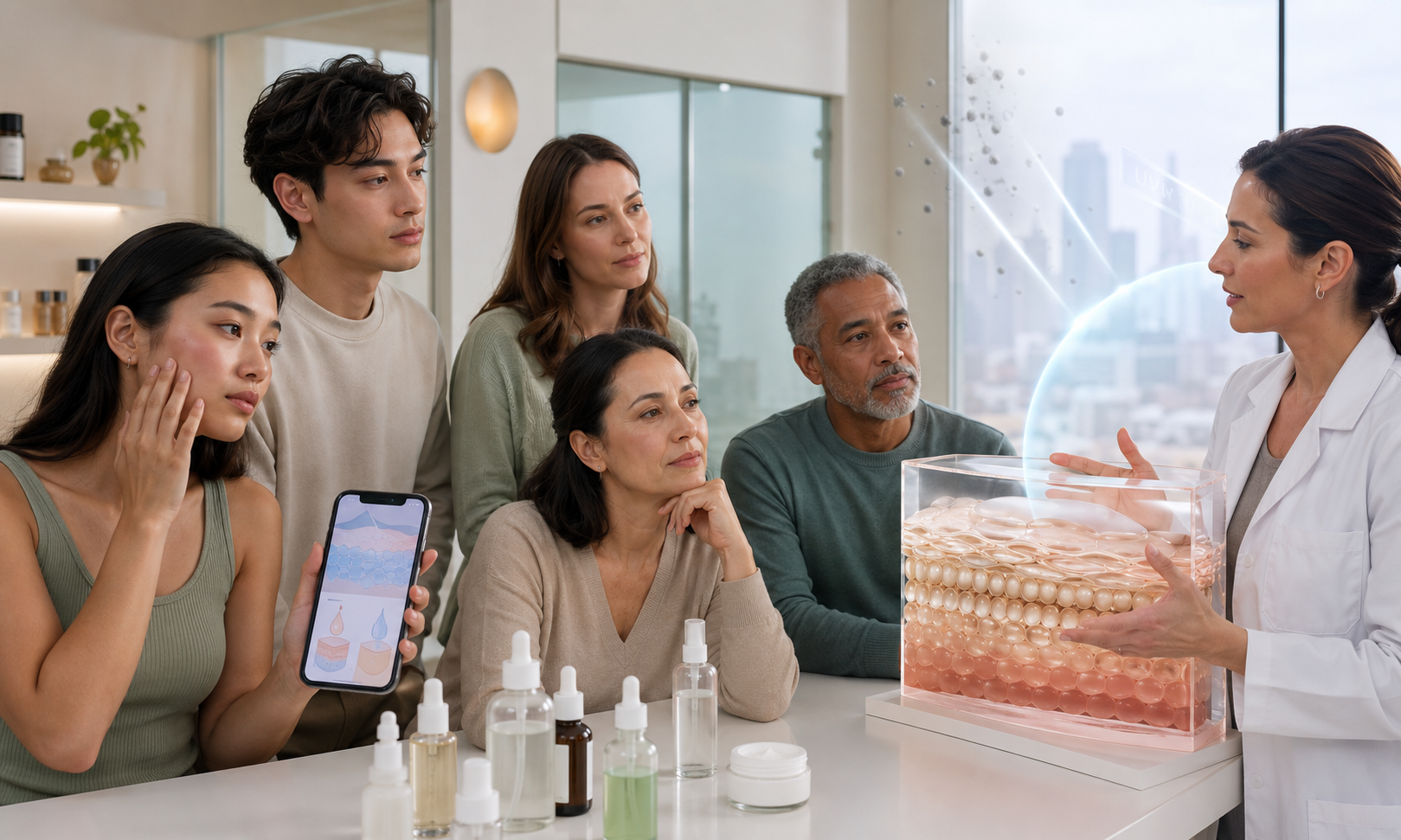
Understanding specific consumer behaviors and preferences is essential for brands developing products in the sensitive skin category.
A. Fragrance-Free and Minimalist Skincare
Fragrance has become the most avoided ingredient category among sensitive skin consumers. Even “natural” fragrances from essential oils are increasingly rejected due to their potential for irritation and allergic reactions.
Consumer Preference for Gentle Formulations
Fragrance-free market dynamics:
- Fragrance-free claims driving purchase decisions for 60%+ of sensitive skin consumers
- Essential oils losing their “natural = safe” halo among educated consumers
- Preference for unscented over “fragrance-free” in some markets due to terminology confusion
- Growth of “scentless” as a premium positioning rather than clinical compromise
Product implications:
- Masking base ingredient odors through formulation technique rather than fragrance addition
- Transparent communication about why products are unscented
- Education about difference between fragrance-free and unscented
“Less Is More” Skincare Trend
Minimalism in skincare reflects both ingredient consciousness and routine simplification. Consumers with sensitive skin are embracing shorter routines with multifunctional products.
Minimalist movement characteristics:
- 3-5 step routines replacing 10+ step regimens
- Preference for products with 15-25 ingredients versus 40+ ingredient lists
- “Skin fasting” and “skin cycling” concepts gaining traction
- Quality over quantity in product selection
Brand opportunities:
- Developing streamlined collections (cleanser, serum, moisturizer, SPF)
- Emphasizing multifunctionality without kitchen-sink formulations
- Clear guidance on simple routines for sensitive skin
B. Barrier Repair and Skin Health
The barrier repair skincare trend has become the cornerstone of sensitive skin product positioning. Consumers actively seek ingredients known to support barrier function.
Demand for Ceramides, Panthenol, and Soothing Ingredients
Hero ingredients for barrier repair:
- Ceramides: Multiple ceramide complexes (NP, AP, EOP) becoming standard expectations
- Panthenol (Pro-Vitamin B5): Valued for humectant and soothing properties
- Niacinamide: Multifunctional barrier support and inflammation reduction
- Centella Asiatica: K-beauty ingredient now globally recognized for calming benefits
- Cholesterol and fatty acids: Supporting lipid barrier layer restoration
- Allantoin: Classic soothing ingredient experiencing renewed interest
Consumer understanding:
- Ability to identify barrier-repair ingredients on labels
- Expectation of ingredient synergies (ceramide + cholesterol + fatty acids)
- Recognition of concentration importance, not just ingredient presence
Skin Barrier Becoming a Mainstream Skincare Concept
Barrier health has expanded beyond sensitive skin into general skincare consciousness. This democratization creates opportunities for crossover positioning.
Market implications:
- Anti-aging products incorporating barrier-support claims
- Acne products emphasizing gentleness and barrier protection
- Post-procedure skincare for cosmetic treatment recovery
- Seasonal barrier-support products for climate transition periods
Key Takeaway: Barrier repair has evolved from therapeutic necessity to preventative wellness, with consumers proactively seeking barrier-supporting ingredients before experiencing sensitivity symptoms.
C. Clean Beauty and Ingredient Transparency
The sensitive skin skincare market overlaps significantly with clean beauty trends, though motivations differ—sensitive skin consumers prioritize safety and tolerability over environmental or ethical concerns alone.
Demand for Simple Ingredient Lists
Transparency expectations:
- Shorter ingredient lists perceived as lower irritation risk
- Suspicion of long, complex formulations with multiple potential irritants
- Preference for recognizable ingredient names
- Understanding that “natural” doesn’t guarantee safety for sensitive skin
Brand communication strategies:
- Explaining each ingredient’s purpose and benefit
- Highlighting what’s excluded (common irritants, allergens)
- Providing concentration ranges for key actives where possible
- Third-party testing and certification for added credibility
Consumers Checking Ingredient Safety
Empowered consumers now research ingredients before purchase using apps, databases, and online resources.
Consumer research behaviors:
- Using ingredient-checking apps (Think Dirty, INCI Beauty, Skin Safe)
- Cross-referencing dermatologist recommendations
- Participating in online communities to discuss formulations
- Avoiding personal trigger ingredients identified through experience
Brand response strategies:
- Proactive ingredient education on product pages
- Addressing common misconceptions about safe ingredients
- Transparency about formulation choices and ingredient sourcing
- Avoiding “free-from” lists that may mislead about safety
D. Microbiome and Sensitive Skin Innovation
Microbiome skincare represents the frontier of sensitive skin innovation, moving beyond symptom relief to addressing root causes of sensitivity.
Growing Interest in Microbiome Skincare
Microbiome science in sensitive skin:
- Understanding that microbiome disruption contributes to sensitivity
- Prebiotics, probiotics, and postbiotics entering formulations
- pH-balanced products supporting healthy skin flora
- Gentle cleansing preserving microbiome diversity
Consumer adoption:
- Early adopters seeking cutting-edge science
- Mainstream consumers following as education expands
- Preference for microbiome-friendly over explicitly probiotic products
- Integration with existing barrier-repair understanding
Long-Term Skin Balance and Resilience
Microbiome positioning shifts focus from immediate symptom relief to sustained skin health—a compelling narrative for preventative-minded consumers.
Resilience messaging:
- Building skin’s ability to handle environmental stressors
- Reducing reactivity over time versus temporary soothing
- Supporting skin’s natural defense mechanisms
- Holistic skin health rather than targeted problem-solving
Key Takeaway: Microbiome skincare offers differentiation opportunities for brands willing to educate consumers on next-generation sensitive skin science, though clear communication about benefits remains essential.
E. Dermatologist-Recommended Products
Dermatologist endorsement has become one of the most powerful trust signals in the sensitive skin category.
Trust in Science-Backed Skincare
Professional validation drivers:
- Social media dermatologists building massive followings
- Consumers seeking expert guidance amid information overload
- Preference for evidence-based claims over marketing language
- Medical aesthetic treatments increasing skincare sophistication
Authenticity requirements:
- Genuine dermatologist involvement versus borrowed authority
- Clinical testing supporting efficacy claims
- Transparent about formulation rationale
- Appropriate use of “dermatologist-tested” claims
Clinical and Low-Irritation Positioning
Clinical positioning strategies:
- Medical-inspired packaging and branding aesthetics
- Hypoallergenic and non-comedogenic testing
- Patch testing and clinical trials supporting claims
- Published studies or white papers on formulations
Market positioning:
- Premium pricing justified through clinical validation
- Mass-market accessibility with clinical credibility
- Professional channel distribution (dermatologist offices, medical spas)
- Direct-to-consumer with strong educational content
Key Takeaway: Dermatologist endorsement must be authentic and supported by genuine clinical validation to resonate with today’s educated sensitive skin consumers who can identify superficial medical positioning.
3. Consumer Buying Priorities
Understanding what drives purchase decisions allows brands to align product development and marketing with consumer values.
Safety and Low Irritation
Primary purchase driver:
Safety supersedes all other considerations for sensitive skin consumers. Products must deliver on gentleness promises or face immediate abandonment and negative reviews.
Consumer expectations:
- Immediate comfort upon application without stinging or burning
- No delayed reactions (redness, breakouts appearing hours later)
- Consistent tolerance across multiple uses
- Ability to use as directed without modification
Fragrance-Free and Alcohol-Free Claims
Critical exclusion claims:
These “free-from” claims serve as initial filters in product selection, often determining whether consumers even consider a product.
Market data:
- Fragrance-free claims can increase purchase intent by 40%+ among sensitive skin shoppers
- Alcohol-free (specifically drying alcohols) equally important for dry, sensitive skin types
- Combination of both claims significantly reduces perceived risk
Clinically Inspired Formulations
Science-backed positioning:
Consumers want reassurance that formulations are developed with dermatological expertise, not just marketing trends.
Valued attributes:
- Dermatologist-tested claims with methodology transparency
- Ingredient concentrations within clinically effective and safe ranges
- pH-appropriate formulations (especially cleansers around 5.5)
- Hypoallergenic formulation and testing protocols
Transparency and Ingredient Education
Informed decision-making:
Modern consumers reject black-box formulations, demanding to understand what they’re applying and why.
Communication preferences:
- Complete ingredient lists with explanations of purpose
- Highlighting hero barrier-repair and soothing ingredients
- Honesty about product limitations and appropriate usage
- Accessibility of information without requiring deep dives
Fast Soothing and Barrier Repair Benefits
Efficacy timeline expectations:
While consumers understand barrier repair takes time, they expect immediate comfort and progressive improvement.
Benefit communication:
- Immediate: Soothing, calming, comfort upon application
- Short-term (days): Reduced redness and irritation visibility
- Medium-term (weeks): Improved barrier function and resilience
- Long-term (months): Sustained tolerance and reduced reactivity
Product Texture and Comfort
Sensorial experience:
For sensitive skin consumers, texture directly impacts perceived gentleness and influences repurchase decisions.
Texture preferences:
- Lightweight, fast-absorbing formulations for daily use
- Rich, cocooning textures for intensive repair (night treatments)
- Non-greasy, makeup-compatible day products
- Non-tacky, immediately comfortable feel
Key Takeaway: Sensitive skin consumers prioritize safety and gentleness above all else, but expect this to coexist with elegant textures, transparent communication, and meaningful efficacy—making formulation excellence essential for market success.
4. Opportunities for Skincare Brands
The sensitive skin skincare market presents multiple entry points and growth vectors for established brands and emerging companies alike.
High-Growth Sensitive Skin Categories
Certain product categories are experiencing exceptional growth within the sensitive skin segment, offering strategic opportunities for focused product development.
Barrier Repair Creams
Market opportunity:
Barrier repair creams represent the fastest-growing category within sensitive skin, with consumers seeking intensive repair solutions.
Product characteristics:
- Ceramide-rich formulations with lipid-replenishing complexes
- Occlusive and emollient textures for overnight barrier recovery
- Multi-ceramide systems (NP, AP, EOP) becoming baseline expectations
- Price points ranging from accessible (15-30) topremium(50-150)
Consumer use cases:
- Nightly repair treatments for compromised barriers
- Post-procedure recovery (chemical peels, laser, microneedling)
- Seasonal support during harsh weather conditions
- SOS treatments for sensitivity flare-ups
Calming Serums
Strategic positioning:
Serums allow high concentrations of soothing actives in elegant, fast-absorbing formats that integrate easily into existing routines.
Ingredient focus:
- Centella asiatica and madecassoside for inflammation reduction
- Niacinamide for barrier support and redness reduction
- Panthenol for hydration and soothing
- Peptides for barrier repair and resilience building
- Thermal water or mineral-rich water bases
Market differentiation:
- Lightweight alternative to heavy creams
- Targeted delivery of calming actives
- Layering flexibility for customized routines
- Appeal to minimalist consumers seeking multifunctionality
Gentle Cleansers
Fundamental category importance:
Cleansing represents the first potential irritation point in any routine, making gentle cleansers essential foundation products.
Formulation innovation:
- Cream cleansers and cleansing balms growing versus foaming formulas
- pH-balanced (4.5-5.5) to support skin barrier
- Minimal surfactant systems using gentle options (coco-glucoside, decyl glucoside)
- No-rinse or low-water formulations for maximum gentleness
Consumer education:
- “Low pH cleanser” becoming search and purchase term
- Understanding that clean doesn’t require squeaky-clean feeling
- Makeup removal efficacy without stripping barrier
- Morning cleansing alternatives (micellar water, essence cleansers)
Sensitive Skin Sunscreens
Critical category gap:
Sunscreen represents the most challenging category for sensitive skin consumers due to common irritants in UV filters and formulations.
Market needs:
- Mineral-only formulations with zinc oxide and titanium dioxide
- Modern textures without white cast (tinted options, nanoparticle technology)
- Fragrance-free, alcohol-free, essential oil-free formulations
- Minimal chemical filter options for those preferring them
Innovation opportunities:
- Hybrid mineral-chemical formulations optimized for sensitivity
- Barrier-supporting sunscreens with ceramides and soothing ingredients
- Elegant textures rivaling conventional sunscreens
- Multi-benefit formulations (SPF + barrier repair + soothing)
Key Takeaway: These four categories represent the highest-opportunity areas for brands entering or expanding in the sensitive skin market, with barrier repair creams and calming serums showing particularly strong growth trajectories.
Private Label and OEM Opportunities
For brands entering the sensitive skin market, partnering with experienced OEM/ODM manufacturers offers significant advantages in speed-to-market and formulation expertise.
Low MOQ Opportunities for Startups
Accessible entry points:
The sensitive skin market’s growth has prompted manufacturers to offer more flexible terms for emerging brands.
Startup advantages:
- Lower minimum order quantities (MOQs) reducing initial capital requirements
- Access to proven formulations without R&D investment
- Faster market entry (3-6 months versus 12-18 months for proprietary development)
- Ability to test market response before major production commitments
Strategic considerations:
- Starting with 2-4 core products covering essential categories
- Building brand identity through positioning and education rather than unique formulations initially
- Scaling to custom formulations as market validation proves demand
- Leveraging manufacturer expertise in regulatory compliance and testing
Customized Formulations
Differentiation through customization:
As brands grow, working with an experienced OEM/ODM skincare manufacturer enables formulation customization that creates competitive advantages.
Customization levels:
- Level 1: Adjusting existing formulations (fragrance removal, texture modification)
- Level 2: Ingredient substitutions or additions within proven bases
- Level 3: Proprietary formulations developed specifically for brand requirements
- Level 4: Patent-pending innovations with exclusive ingredient partnerships
Custom development benefits:
- Unique positioning in crowded sensitive skin market
- Ability to target specific sensitive skin sub-segments
- Integration of emerging ingredients and technologies
- Brand storytelling around proprietary formulation approaches
Fast-Growing Demand for Sensitive Skin Products Globally
Regional market dynamics:
The sensitive skin product trend is global, though regional preferences and opportunities vary significantly.
Market opportunities by region:
- North America: Premium barrier-repair products, dermatologist-endorsed brands, clean beauty overlap
- Europe: Pharmacy/parapharmacie channel dominance, thermal water traditions, strict regulation favoring quality
- Asia-Pacific: K-beauty influence, centella asiatica popularity, lightweight textures, microbiome innovation
- Latin America: Growing middle class seeking quality sensitive skin solutions, climate-appropriate formulations
- Middle East: Climate-stress focus, luxury sensitive skin positioning, halal certification requirements
Export and international expansion:
For brands working with OEM/ODM manufacturers, international regulatory expertise becomes critical for scaling globally.
Global expansion considerations:
- Regional regulatory compliance (EU, FDA, NMPA, etc.)
- Climate-appropriate formulations for different markets
- Cultural preferences in texture, packaging, and positioning
- Local ingredient availability and sourcing logistics
Key Takeaway: OEM/ODM partnerships provide scalable pathways from startup to international brand, with sensitive skin formulations offering strong margins and customer loyalty that justify investment in quality manufacturing relationships.
Product Positioning Strategies
Effective positioning differentiates brands in an increasingly competitive sensitive skin market, moving beyond generic “gentle” claims.
Science-Backed Branding
Evidence-based positioning:
Consumers reward brands that demonstrate genuine scientific credentials rather than borrowing scientific aesthetics.
Scientific credibility markers:
- Clinical trials showing efficacy and tolerance
- Published research or white papers on formulation approach
- Partnerships with dermatological research institutions
- Ingredient concentration transparency
- Before/after documentation with proper methodology
Brand communication:
- Educational content explaining formulation science
- Addressing the “why” behind ingredient selections
- Accessible science that empowers consumers without overwhelming
- Social proof through dermatologist partnerships and testimonials
Dermatologist-Inspired Messaging
Medical authority positioning:
Dermatologist association provides instant credibility, but must be authentic to maintain consumer trust.
Effective dermatologist positioning:
- Genuine involvement in formulation development
- Named dermatologist partnerships with real engagement
- “Developed with dermatologists” versus “dermatologist-tested” clarity
- Educational content featuring medical professionals
- Clinical testing protocols matching medical standards
Avoiding credibility pitfalls:
- Generic “dermatologist-tested” claims without specifics
- Stock photo doctors without authentic involvement
- Over-promising medical-grade results without substantiation
- Borrowing medical aesthetics without clinical backing
Barrier Repair Positioning
Owning barrier expertise:
As barrier repair becomes central to sensitive skin, brands can differentiate through specialized barrier-focused positioning.
Barrier-centric brand strategies:
- Comprehensive barrier-repair systems (not just single products)
- Education on barrier anatomy and function
- Ingredient synergies specifically for lipid layer support
- Before/after measurements of barrier function (TEWL testing)
- Long-term barrier health protocols and guidance
Messaging framework:
- Immediate comfort + progressive barrier restoration
- Prevention and maintenance, not just crisis intervention
- Skin resilience building for long-term sensitivity reduction
- Foundation for all other skincare goals
Key Takeaway: Successful positioning in the sensitive skin market requires authentic scientific credibility, genuine dermatologist involvement, and deep expertise in barrier health—consumers quickly recognize and reject superficial medical positioning.
Formulation and Innovation Trends
Staying ahead of formulation trends ensures brands remain relevant and competitive in the rapidly evolving sensitive skin category.
Multi-Functional Soothing Ingredients
Efficiency through multi-functionality:
Modern formulations emphasize ingredients that deliver multiple benefits simultaneously, supporting minimalist product approaches.
Star multi-functional ingredients:
Niacinamide (Vitamin B3):
- Barrier repair through ceramide synthesis stimulation
- Anti-inflammatory and redness reduction
- Sebum regulation for sensitive, acne-prone skin
- Hyperpigmentation improvement
- Concentration sweet spot: 2-5% for sensitive skin
Panthenol (Pro-Vitamin B5):
- Humectant hydration
- Anti-inflammatory soothing
- Barrier repair support
- Wound healing acceleration
- Excellent tolerance across concentrations
Centella Asiatica (Cica):
- Anti-inflammatory and calming
- Collagen synthesis support
- Antioxidant protection
- Wound healing (madecassoside, asiaticoside)
- Multiple extraction forms for different benefits
Allantoin:
- Keratolytic at higher concentrations
- Soothing and anti-irritant
- Wound healing support
- Moisture retention
- Synergistic with other calming ingredients
Beta-Glucan:
- Immune modulation and soothing
- Deep hydration
- Wound healing acceleration
- Antioxidant properties
- Film-forming protection
Minimalist Formulations
Strategic simplification:
Minimalist formulations align with consumer preferences while reducing irritation risk through fewer potential triggers.
Minimalism principles:
- 15-25 total ingredients versus 40+ in conventional products
- Each ingredient serving clear, justifiable purpose
- Eliminating “nice-to-have” additions that increase risk
- Focus on efficacy and safety over sensory luxury
- Transparent explanation for every inclusion
Formulation challenges:
- Achieving elegant textures with minimal emulsifiers
- Preservation without controversial preservative systems
- Stability without extensive stabilizer networks
- Sensory appeal with minimal masking ingredients
Market positioning:
- “Clean clinical” aesthetic
- Transparency as luxury
- Formulation integrity over marketing embellishment
- Educational content explaining minimalist philosophy
Long-Term Barrier Support
Sustained health versus quick fixes:
Next-generation formulations emphasize building skin resilience rather than temporary symptom relief.
Long-term support strategies:
Lipid-replenishing systems:
- Multiple ceramide types mimicking natural barrier composition
- Cholesterol and free fatty acids in physiological ratios
- Sustained lipid synthesis support, not just topical replacement
Microbiome support:
- Prebiotic ingredients nourishing beneficial bacteria
- pH optimization for healthy flora
- Avoiding antimicrobial ingredients that disrupt balance
- Postbiotics (bacterial ferment filtrates) for inflammation modulation
Skin strengthening actives:
- Peptides supporting structural proteins
- Antioxidants preventing cumulative damage
- Niacinamide for sustained barrier improvement
- Ingredients supporting natural moisturizing factor (NMF)
Formulation philosophy:
- Results developing over 4-8 weeks, not overnight
- Preventative maintenance protocols
- Integration with lifestyle factors (diet, stress, sleep)
- Skin cycling compatibility for those using actives
Key Takeaway: Formulation innovation in sensitive skin focuses on intelligent multi-functionality, thoughtful minimalism, and long-term resilience building—representing a maturation from reactive symptom relief to proactive skin health.
Conclusion
The sensitive skin category rewards brands that prioritize long-term consumer relationships over short-term sales, invest in genuine formulation innovation, and commit to transparent, educational communication. As the market continues maturing, the winners will be those who view sensitive skin not as a marketing opportunity but as a meaningful consumer need deserving thoughtful, science-based solutions.
For brands ready to develop sensitive skin products, partnering with manufacturers who understand the nuanced formulation requirements, regulatory landscapes, and market positioning strategies specific to this category provides the foundation for sustainable success in this high-growth segment.
Sensitive Skin Research Center
You May Also Like


Develop Your Skincare Products
Looking to launch your own skincare line? Our experienced team can support you through every stage of the development process. From custom formulation and ingredient selection to packaging and full-scale manufacturing, we provide complete OEM and private label solutions tailored to your brand.
