
Top Ingredients That Calm Irritated Skin
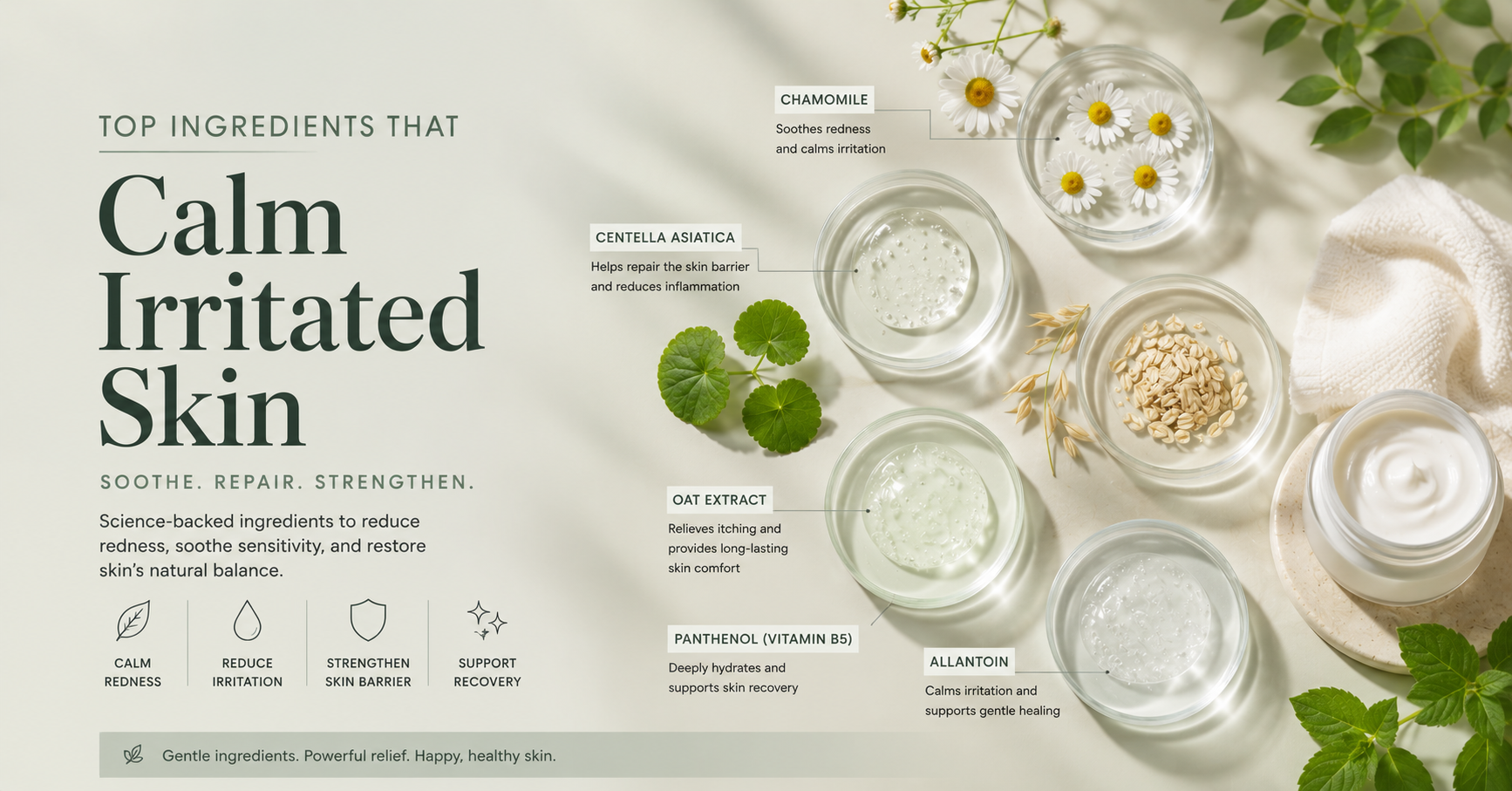
1. Why Skin Becomes Irritated
Understanding the root causes of skin irritation is essential for developing effective soothing skincare products. Irritation isn’t just a cosmetic concern—it’s a signal that something has compromised your skin’s natural defense system.
Skin Barrier Damage
The skin barrier is your body’s first line of defense. When it’s compromised, trans-epidermal water loss (TEWL) increases, leaving skin vulnerable to irritants, allergens, and pathogens. Barrier damage can result from harsh cleansers, environmental pollution, or genetic conditions like eczema.
A damaged barrier cannot retain moisture effectively, leading to dryness, tightness, and increased sensitivity to products that would normally be well-tolerated.
Inflammation and Redness
Inflammation is the body’s natural response to perceived threats. When skin becomes inflamed, blood vessels dilate, causing visible redness and warmth. Chronic inflammation can accelerate aging and worsen conditions like rosacea and dermatitis.
Pro-inflammatory cytokines trigger this response, which is why anti-inflammatory skincare ingredients are crucial for managing irritated skin.
Environmental Stress
UV radiation, pollution, extreme temperatures, and wind all contribute to oxidative stress and barrier disruption. These environmental aggressors generate free radicals that damage cellular structures and trigger inflammatory pathways.
Urban environments, in particular, expose skin to particulate matter and heavy metals that penetrate the skin and cause irritation.
Over-Exfoliation and Harsh Ingredients
The modern skincare trend toward active ingredients has led to a rise in over-exfoliation. Using too many acids, retinoids, or physical scrubs can strip away the protective lipid layer, causing microtears and inflammation.
Ingredients like high-concentration alcohol, synthetic fragrances, and certain preservatives can also trigger sensitivity in vulnerable skin types.
Neurosensory Sensitivity
Some irritation isn’t visible—it’s felt. Neurosensory sensitivity involves nerve endings in the skin that become hyperreactive, causing sensations of burning, stinging, or itching without obvious inflammation.
This type of sensitivity often requires ingredients that calm nerve responses, not just reduce inflammation.
Key Takeaways:
- Skin irritation stems from barrier damage, inflammation, environmental stress, harsh products, or nerve hypersensitivity
- Understanding the cause helps guide ingredient selection
- Effective soothing products address multiple irritation pathways simultaneously
2. Key Functions of Soothing Ingredients
Calming ingredients for sensitive skin work through specific mechanisms that target different aspects of irritation. The best soothing skincare formulations incorporate multiple functional approaches.
Anti-Inflammatory Effects
Anti-inflammatory ingredients suppress the production of pro-inflammatory mediators like cytokines and prostaglandins. They calm the immune response without completely suppressing it, allowing skin to heal without overreacting.
These ingredients often work by inhibiting inflammatory pathways such as NF-κB or COX-2 enzymes.
Barrier Repair Support
Ingredients that support barrier repair help restore the lipid matrix and structural proteins that keep skin intact. They may supply ceramides, cholesterol, fatty acids, or stimulate the skin’s natural production of these components.
A strong barrier naturally reduces sensitivity by preventing irritant penetration.
Hydration and Moisture Retention
Proper hydration is foundational to calm skin. Humectants attract water to the skin, while occlusives prevent water loss. Adequate hydration plumps the skin, reduces the appearance of fine lines, and helps maintain optimal barrier function.
Dehydrated skin is inherently more sensitive and reactive.
Redness Reduction
Some ingredients specifically target the vascular component of irritation, reducing the dilation of blood vessels that causes visible redness. These ingredients help even out skin tone and reduce the flushed appearance associated with sensitivity.
Protection Against Environmental Stress
Protective ingredients create a shield against pollution, UV damage, and other environmental aggressors. They may work through antioxidant activity, film-forming properties, or by strengthening cellular defense mechanisms.
This preventive approach reduces the cumulative stress that leads to chronic sensitivity.
Key Takeaways:
- Effective soothing ingredients address inflammation, barrier function, hydration, redness, and environmental protection
- The best formulations combine multiple mechanisms for comprehensive care
- Prevention is as important as treatment when managing sensitive skin
3. Best Soothing Ingredients
These are the top ingredients that calm irritated skin, backed by research and proven effective in clinical and real-world settings.
A. Panthenol
Also known as provitamin B5, panthenol is a cornerstone ingredient in soothing skincare formulations.
Hydration and Soothing Benefits
Panthenol is a powerful humectant that penetrates deeply into the skin and attracts moisture from the environment. Once absorbed, it converts to pantothenic acid, which plays a vital role in cellular metabolism and skin repair.
It provides immediate relief from dryness, tightness, and discomfort. Studies show panthenol significantly reduces TEWL, helping skin maintain optimal hydration levels.
Barrier Repair Support
Panthenol accelerates wound healing and supports the regeneration of damaged tissue. It stimulates fibroblast proliferation and promotes the synthesis of lipids that are essential for barrier integrity.
Typical usage rate: 2-5% in leave-on products
Best for: All skin types, especially dry, irritated, or post-procedure skin
B. Centella Asiatica
This botanical powerhouse has been used in traditional medicine for centuries and is now a staple in modern calming ingredients for sensitive skin.
Calming Irritated Skin
Centella asiatica contains active compounds called triterpenoids—asiaticoside, madecassoside, asiatic acid, and madecassic acid. These compounds have strong anti-inflammatory properties that reduce redness and calm reactive skin.
Research demonstrates centella’s ability to inhibit inflammatory cytokines and reduce oxidative stress.
Wound Healing and Repair Support
Centella promotes collagen synthesis and supports the formation of healthy tissue. It’s particularly effective for compromised barriers, acne-prone skin, and conditions involving inflammation.
The ingredient also has antimicrobial properties that can benefit acne-prone sensitive skin without causing additional irritation.
Typical usage rate: 0.1-3% (extract concentration varies)
Best for: Sensitive, acne-prone, and rosacea-prone skin
C. Beta-Glucan
This polysaccharide, often derived from oats or mushrooms, offers unique benefits for stressed skin.
Immune Support and Anti-Inflammatory Effects
Beta-glucan activates immune cells in the skin, helping them respond more effectively to damage while simultaneously reducing inflammatory overreactions. This balanced immune response is key for managing chronic sensitivity.
It’s particularly effective at reducing the discomfort associated with dermatitis and other inflammatory conditions.
Moisture Retention
Beta-glucan forms a light, breathable film on the skin’s surface that helps prevent moisture loss while allowing the skin to breathe. It provides deep, lasting hydration without a heavy or greasy feel.
This film also offers some protection against environmental irritants.
Typical usage rate: 0.5-2%
Best for: Very sensitive, reactive, and eczema-prone skin
D. Allantoin
A gentle, well-tolerated ingredient that’s been used in skincare for decades.
Skin Comfort and Irritation Reduction
Allantoin has mild keratolytic properties, meaning it gently softens and removes dead skin cells without the harshness of chemical exfoliants. This helps improve product absorption while maintaining comfort.
It also has soothing properties that provide immediate relief from itching, burning, and tightness.
Support for Damaged Skin
Allantoin promotes cell regeneration and supports the healing of minor wounds, burns, and irritation. It’s often included in post-procedure skincare and products designed for compromised barriers.
Typical usage rate: 0.1-2%
Best for: All skin types, particularly useful in gentle exfoliating formulations for sensitive skin
E. Bisabolol
This naturally occurring component of chamomile essential oil offers powerful calming benefits without the irritation potential of the full essential oil.
Redness Reduction
Bisabolol is exceptionally effective at reducing visible redness. It calms the vascular response that causes flushing and helps even out skin tone in reactive skin types.
Anti-Inflammatory Benefits
Research shows bisabolol inhibits inflammatory mediators and provides antioxidant protection. It’s particularly effective when combined with other anti-inflammatory skincare ingredients like panthenol or centella.
Bisabolol also enhances the penetration of other ingredients, making formulations more effective overall.
Typical usage rate: 0.1-1%
Best for: Redness-prone, rosacea, and sensitive skin
F. Madecassoside
One of the most potent active compounds isolated from centella asiatica, madecassoside deserves special attention.
Sensitive Skin Support
Madecassoside has been extensively studied for its ability to reduce skin sensitivity. It calms overreactive nerve endings that cause stinging and burning sensations, addressing neurosensory sensitivity.
Clinical studies show significant improvements in skin tolerance and comfort with regular use.
Barrier Recovery Benefits
This ingredient actively supports barrier repair by promoting the synthesis of ceramides and other lipids essential for skin integrity. It’s particularly valuable in formulations targeting severely compromised barriers.
Madecassoside also offers antioxidant protection and reduces inflammation at the cellular level.
Typical usage rate: 0.1-1%
Best for: Very sensitive, compromised, and reactive skin types
G. Ectoin
A relatively new ingredient in mainstream skincare, ectoin is gaining recognition as one of the best ingredients for redness and irritation.
Environmental Stress Protection
Ectoin is an extremolyte—a molecule that protects organisms in extreme conditions. In skincare, it shields skin cells from environmental stressors including UV radiation, pollution, and temperature extremes.
It stabilizes cellular structures and prevents protein denaturation caused by stress, essentially acting as a cellular bodyguard.
Long-Term Barrier Defense
Unlike ingredients that only provide temporary relief, ectoin builds long-term resilience. It strengthens the skin’s natural defense mechanisms, reducing reactivity over time.
Studies show ectoin reduces inflammation, supports barrier function, and provides lasting protection against urban environmental stress.
Typical usage rate: 0.5-2%
Best for: Urban dwellers, environmentally stressed skin, and those seeking long-term sensitivity improvement
Key Takeaways:
- Panthenol and beta-glucan excel at hydration and barrier support
- Centella asiatica, bisabolol, and madecassoside offer powerful anti-inflammatory benefits
- Allantoin provides gentle exfoliation and comfort
- Ectoin protects against environmental stress and builds long-term resilience
- Each ingredient has unique strengths that can be combined for comprehensive care
4. How to Combine Soothing Ingredients
Creating effective calming skincare requires more than just adding multiple soothing ingredients to a formula. Strategic combination and formulation expertise are essential.
Ingredient Synergy
Some ingredients work better together than separately. This synergistic effect means the combined result is greater than the sum of individual ingredients.
For example:
- Panthenol + Centella Asiatica: Hydration meets anti-inflammatory power, addressing both dryness and inflammation simultaneously
- Beta-glucan + Allantoin: Deep moisture retention combined with gentle surface improvement
- Bisabolol + Madecassoside: Redness reduction enhanced by nerve-calming effects
- Ectoin + Panthenol: Environmental protection coupled with immediate barrier repair
Combining Hydration + Barrier Repair + Anti-Inflammatory Support
The most effective soothing formulations address all three pillars:
Hydration layer: Panthenol, beta-glucan, or hyaluronic acid attract and bind moisture
Barrier repair layer: Ceramides, cholesterol, fatty acids, or madecassoside restore structural integrity
Anti-inflammatory layer: Centella asiatica, bisabolol, or allantoin calm reactive processes
This multi-layered approach ensures comprehensive care that addresses both symptoms and root causes.
Layering Ingredients Without Overloading the Skin
More isn’t always better. Overloading formulations can:
- Increase the risk of sensory irritation (heavy feel, pilling)
- Create stability issues
- Overwhelm sensitive skin with too many actives
For brands developing soothing skincare products, the goal is thoughtful formulation with optimal concentrations rather than cramming in every possible ingredient.
A well-formulated serum with 4-5 complementary ingredients at effective concentrations will outperform a product with 15 ingredients at insufficient levels.
pH Compatibility and Formulation Balance
Soothing ingredients generally prefer neutral to slightly acidic pH ranges (5.0-6.5), which aligns well with the skin’s natural pH.
This is advantageous because:
- Neutral pH formulations are inherently less irritating
- Most soothing ingredients remain stable in this range
- It supports barrier function and microbial balance
However, formulation chemistry involves balancing:
- Ingredient solubility
- Preservative efficacy
- Texture and sensory properties
- Stability over shelf life
Working with an experienced OEM skincare manufacturer ensures these technical considerations are properly addressed.
Examples of Effective Soothing Ingredient Combinations
For redness-prone skin:
- Bisabolol 0.5%
- Centella asiatica extract 1%
- Panthenol 3%
- Allantoin 0.5%
For barrier-compromised skin:
- Madecassoside 0.5%
- Beta-glucan 1%
- Panthenol 4%
- Ceramide complex 2%
For environmentally stressed skin:
- Ectoin 1%
- Panthenol 3%
- Centella asiatica extract 2%
- Bisabolol 0.3%
For neurosensory sensitivity:
- Madecassoside 1%
- Allantoin 1%
- Beta-glucan 1.5%
- Panthenol 2%
These combinations represent starting frameworks that can be refined based on specific product goals, texture preferences, and target demographics.
Key Takeaways:
- Ingredient synergy amplifies soothing benefits
- Effective formulations balance hydration, barrier repair, and anti-inflammatory action
- Less can be more—avoid overloading formulations
- pH compatibility supports both ingredient stability and skin comfort
- Strategic combinations should be tailored to specific sensitivity concerns
Conclusion
The key to successful soothing skincare lies not just in ingredient selection, but in proper formulation strategy. Concentration, pH balance, ingredient synergy, and formulation stability all play crucial roles in delivering real results.
For brands developing soothing skincare products, partnering with a knowledgeable manufacturer who understands the science of sensitive skin is invaluable. Formulation expertise ensures that promising ingredients translate into products that truly perform—products that consumers trust and repurchase.
As the market for calming ingredients for sensitive skin continues to grow, the brands that succeed will be those that prioritize both efficacy and gentleness, backed by thoughtful formulation and quality ingredients.
Sensitive Skin Research Center
You May Also Like


Develop Your Skincare Products
Looking to launch your own skincare line? Our experienced team can support you through every stage of the development process. From custom formulation and ingredient selection to packaging and full-scale manufacturing, we provide complete OEM and private label solutions tailored to your brand.
