
What Happens to Skin After 30
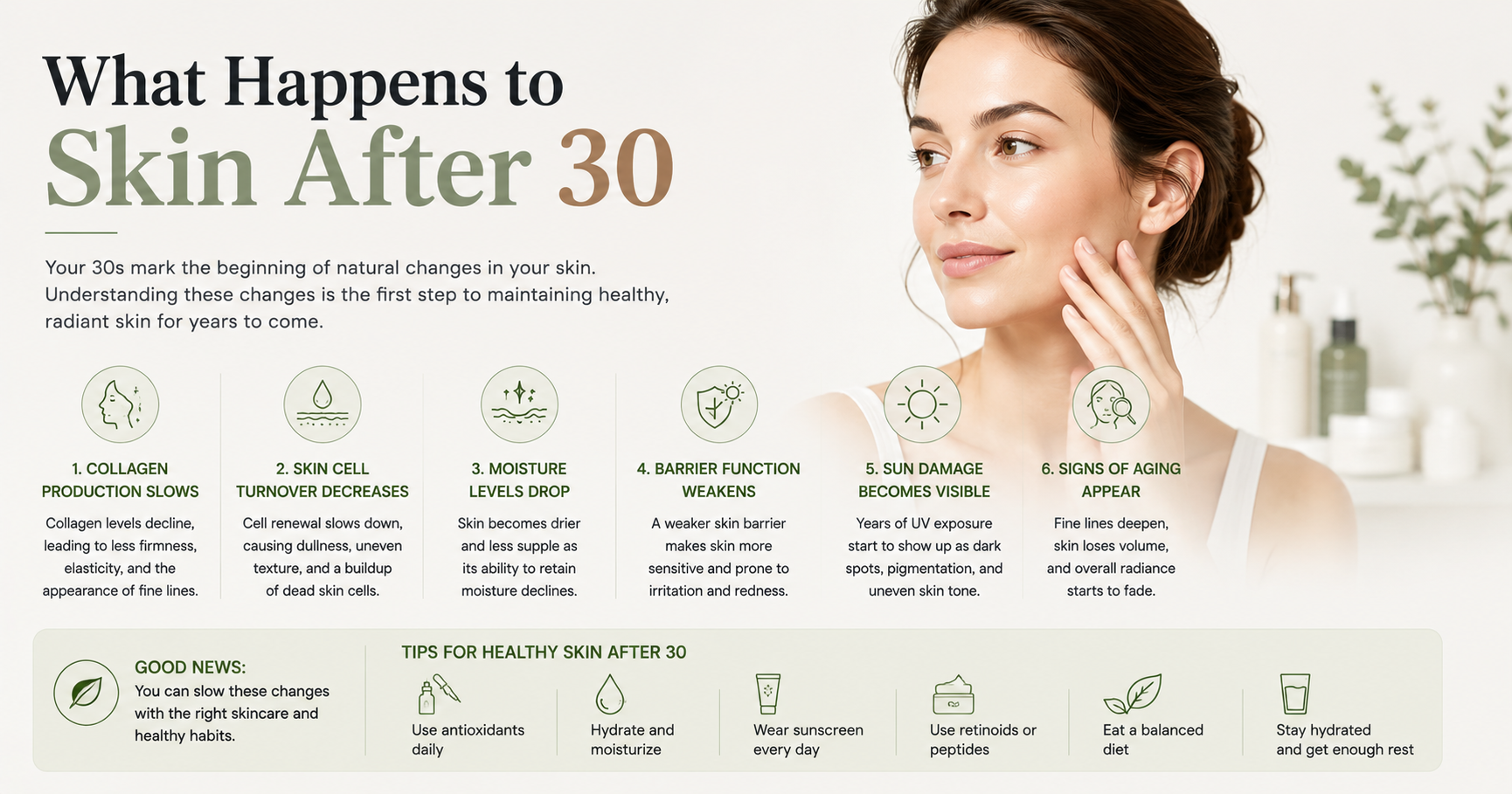
After age 30, the skin’s natural regenerative processes slow down significantly: collagen production decreases by approximately 1% per year, cell turnover extends from 28 to 40 days, and moisture retention declines due to weakening barrier function. These biological shifts mark the transition from youthful, self-maintaining skin to skin that requires active intervention to preserve its appearance and health.
Age 30 represents a measurable turning point when the first visible signs of aging—fine lines, dullness, uneven texture, and increased dryness—become noticeable even to those who experienced flawless skin throughout their twenties. Understanding these changes enables both consumers and skincare brands to implement strategic, evidence-based solutions that address aging at its biological source.
Why Age 30 Is a Turning Point for Skin
Age 30 marks a key turning point when the skin gradually shifts from active regeneration to slower maintenance and repair. Collagen production begins to decline, cell turnover slows down, and the skin barrier becomes less efficient over time.
During the twenties, skin typically regenerates quickly, with strong collagen production and a healthy protective barrier. After 30, these processes begin to slow due to natural aging, hormonal changes, and accumulated environmental damage.
Collagen production decreases by about 1% each year after 30. While this decline is gradual, it becomes more noticeable over time, leading to reduced firmness, elasticity, and overall skin resilience.
Early intervention is essential. Starting preventive skincare in the thirties helps slow down visible aging and maintain skin quality more effectively than waiting until deeper signs appear later.
A. Decrease in Collagen and Elasticity
Collagen, the structural protein that provides skin firmness and resilience, decreases by approximately 1% annually after age 30, while existing collagen fibers become increasingly fragmented and disorganized. This dual process—reduced production and structural degradation—forms the foundation of visible aging.
The dermis, the skin’s middle layer where collagen and elastin reside, begins to thin as these structural proteins decline. This thinning reduces the skin’s three-dimensional architecture, leading to gradual loss of facial volume and contour definition. Areas with naturally thinner skin—around the eyes, neck, and jawline—show these changes first.
Elastin, responsible for the skin’s ability to return to its original position after stretching or movement, also deteriorates during this period. While elastin degradation progresses more slowly than collagen loss, its decline becomes evident in areas of repeated facial expression, particularly around the eyes and mouth.
B. Impact on Firmness and Sagging
The combined loss of collagen and elastin directly translates to reduced skin firmness. Fine lines that previously disappeared immediately after facial expressions begin to linger as collagen-depleted skin loses its ability to spring back completely. This represents an early warning that the skin’s structural support system requires intervention.
Skin texture changes as collagen declines, developing a slightly less refined quality. The surface may appear less smooth under close inspection, with subtle irregularities becoming more noticeable, particularly in sun-exposed areas like the cheeks and forehead.
C. Slower Skin Cell Turnover
Cell turnover rate, which takes approximately 28 days in the twenties, slows to 35-40 days after age 30 and continues to extend with each passing decade. This deceleration means dead skin cells accumulate on the surface longer before being naturally shed, creating multiple visible and functional consequences.
The extended presence of non-viable cells on the skin surface creates a physical barrier that affects both appearance and product penetration. Active ingredients in skincare formulations must work harder to reach their target sites in deeper layers when dead cell buildup creates an obstacle.
Slower turnover also impacts the skin’s healing capacity and resilience. Post-inflammatory marks from breakouts, minor environmental damage, and skin injuries take longer to resolve as the cellular replacement cycle extends.
D. Impact on Dullness and Texture
Dead cell accumulation on the skin’s surface is the primary cause of the dullness commonly reported after age 30, as these cells reflect light unevenly rather than creating the uniform glow characteristic of younger skin. This creates a lackluster, tired appearance even when well-rested and healthy.
Texture irregularities become more pronounced as cell turnover slows. The skin’s surface feels rougher to the touch and shows less uniform smoothness. Fine bumps, slightly enlarged pores, and uneven patches develop more readily when cellular renewal cannot keep pace with daily damage.
The decreased rate of cellular renewal also reduces the skin’s natural ability to self-exfoliate, making chemical or physical exfoliation increasingly important as a skincare strategy after 30.
C. Increased Dryness and Barrier Weakening
The skin’s barrier function—its ability to retain moisture and protect against environmental irritants—weakens after age 30 due to decreased production of lipids, ceramides, and natural moisturizing factors. This creates a fundamental shift in how skin maintains hydration and protects itself.
Sebum production begins to decline during this decade, a change particularly noticeable for those who had oily skin in their twenties. The skin may transition from oily to combination or normal, while those with already dry skin experience increased tightness and potential sensitivity.
The lipid matrix that holds skin cells together—the “mortar” between cellular “bricks”—becomes less robust. This structural weakening creates microscopic gaps that allow water to evaporate more easily (transepidermal water loss) and permit irritants to penetrate more readily.
D. Consequences for Moisture Retention and Sensitivity
Even individuals who never experienced dryness in their twenties may notice tightness, flaking, or dehydration after 30 due to compromised barrier function and increased transepidermal water loss. This represents a skin type shift that requires routine adjustment, not a temporary condition.
Dehydrated skin emphasizes fine lines, appears dull, and feels uncomfortable. Inadequate moisture also impairs the skin’s ability to maintain optimal pH and enzymatic functions, creating cascading issues beyond simple surface dryness.
Barrier weakness increases reactivity to previously tolerated products, ingredients, and environmental factors. Many people in their thirties notice their skin becoming more sensitive, showing redness or irritation from products, weather conditions, or cosmetics that caused no issues in earlier years.
Early Signs of Aging
The biological changes occurring after 30 manifest as specific visible signs that typically emerge in a predictable pattern. Recognizing these early indicators allows for timely intervention before more advanced aging becomes established.
A. Fine Lines and Expression Lines
Expression lines around the eyes, between the eyebrows, and around the mouth transition from temporary creases to permanent features as collagen support diminishes and skin loses its elastic rebound. These lines form in areas of repeated facial movement where skin folds thousands of times daily.
In collagen-rich younger skin, these folds smooth completely when the face relaxes. After 30, the skin gradually loses complete rebound capability, and shallow lines begin to persist even at rest. The under-eye area often shows aging signs first due to exceptionally thin skin and constant movement.
These early fine lines respond well to intervention with appropriate skincare ingredients, making the thirties an optimal time to address them before they deepen into more established wrinkles.
B. Dullness and Loss of Radiance
The youthful glow that characterizes skin in the twenties begins to fade as cell turnover slows and surface texture becomes less refined. Light scatters unevenly across an irregular surface rather than reflecting uniformly, creating an appearance of dullness that skincare often describes as loss of radiance.
Decreased microcirculation contributes to radiance loss as tiny blood vessels that deliver oxygen and nutrients to the skin become less efficient. This reduces the healthy flush that contributes to a vibrant, youthful appearance.
Surface dehydration from barrier weakening further compounds dullness, as well-hydrated skin reflects light more effectively than dehydrated skin.
C. Uneven Skin Tone and Early Pigmentation
Melanin production becomes increasingly irregular after 30, with some melanocytes becoming hyperactive while others decrease function, creating uneven skin tone, age spots, and persistent pigmentation concerns. This inconsistency reflects both intrinsic aging and cumulative sun exposure manifesting as visible damage.
Years of UV exposure accumulated during the twenties begin appearing as sun spots, freckling, or melasma during the thirties, particularly in areas of repeated sun exposure. Post-inflammatory hyperpigmentation from breakouts or minor injuries also becomes more persistent as skin’s self-repair mechanisms slow.
The overall complexion may appear less uniform, with areas of darkness around the eyes, redness in the cheeks, or general sallowness replacing the even coloring typical of younger skin.
How Skincare Needs Change After 30
The transition from twenties to thirties requires a fundamental shift from basic maintenance skincare to active treatment formulations that address declining biological functions and emerging aging signs. Simple cleansing and moisturizing, which may have been sufficient previously, no longer adequately supports the skin’s evolving needs.
Effective skincare after 30 requires a dual approach combining prevention and correction. Preventive measures slow future aging through sun protection and antioxidant use, while corrective treatments address existing concerns like collagen loss, texture irregularities, and early pigmentation.
A. From Passive Maintenance to Active Intervention
Twenty-something skin thrives with basic care and protection, but skin after 30 benefits from active ingredients that stimulate cellular processes rather than simply maintaining status quo. This means incorporating products with scientifically proven ingredients like retinoids, peptides, growth factors, and potent antioxidants that influence cellular behavior and compensate for declining natural functions.
The focus must shift from surface-level concerns to addressing changes occurring in deeper skin layers. Ingredients need to penetrate effectively to reach the dermis where collagen and elastin reside, requiring formulations specifically designed for optimal delivery.
Product layering becomes increasingly important as multiple concerns emerge simultaneously. A comprehensive routine might include a targeted serum for collagen support, separate treatment for hyperpigmentation, specialized eye care, and barrier-strengthening moisturizer—each addressing specific aspects of aging.
B. The Importance of Consistency and Realistic Timelines
Building collagen, improving cell turnover, and strengthening the barrier are gradual processes that require 8-12 weeks of consistent use before visible improvements appear. This long-term approach differs fundamentally from the quick-fix mentality that may have characterized earlier skincare habits.
Consistency matters more than perfection. A simple routine followed reliably delivers better results than an elaborate regimen abandoned after a few weeks. Understanding that preventive care pays dividends over years rather than days helps maintain commitment to effective practices.
Recommended Anti-Aging Ingredients for 30+
Choosing the right ingredients is essential for addressing skin changes after 30. Effective anti-aging skincare relies on proven actives that support collagen, protect against damage, and improve hydration.
The most effective ingredients work by targeting collagen loss, oxidative stress, and barrier weakening.
A. Retinoids: The Gold Standard
Retinoids are widely considered the most effective anti-aging ingredients. They stimulate collagen production, accelerate cell turnover, and improve skin texture, tone, and fine lines.
Retinol, a common over-the-counter form, converts into active retinoic acid in the skin. Stronger prescription forms offer faster results but may cause more irritation.
For skin after 30, retinoids should be introduced gradually. With consistent use, they can visibly improve firmness and reduce early signs of aging.
Retinoids are one of the most proven ingredients for improving collagen and reducing wrinkles.
B. Peptides: Supporting Collagen Production
Peptides are short chains of amino acids that signal the skin to produce more collagen. They help improve elasticity and support long-term skin structure.
Different types of peptides perform different functions, from stimulating collagen synthesis to improving skin firmness. They are often used together in formulations for better results.
Peptides work well alongside retinoids, providing additional support for collagen production.
Peptides help reinforce the skin’s structure by supporting natural collagen production.
C. Antioxidants: Protection and Repair
Antioxidants protect the skin from free radical damage caused by UV exposure, pollution, and daily stress. This protection becomes more important after 30 as the skin’s natural defenses weaken.
Vitamin C is one of the most effective antioxidants. It helps boost collagen production, brighten skin tone, and protect against environmental damage.
Niacinamide strengthens the skin barrier, reduces inflammation, and improves overall skin texture. It is well tolerated and suitable for most skin types.
Antioxidants help prevent collagen breakdown by protecting the skin from environmental damage.
D. Hyaluronic Acid: Hydration and Skin Support
Hyaluronic acid is essential for maintaining skin hydration. It helps the skin retain moisture, making it appear smoother and more plump.
As skin becomes drier after 30, hydration plays a key role in maintaining a healthy barrier. Well-hydrated skin also shows fewer visible fine lines.
Other ingredients like glycerin and panthenol can further support hydration and barrier function.
Hydration is essential for maintaining skin elasticity and reducing the appearance of aging.
E. Chemical Exfoliants: Improving Skin Renewal
Exfoliating acids help compensate for slower cell turnover after 30. They remove dead skin cells, improve texture, and enhance product absorption.
Alpha hydroxy acids (AHAs) such as glycolic acid improve dullness and uneven tone. Gentler options like polyhydroxy acids (PHAs) are suitable for sensitive skin.
Regular but moderate use can help maintain smoother and more radiant skin.
Exfoliation supports skin renewal and improves the effectiveness of other skincare ingredients.
Strategic Ingredient Combinations
The most effective approach after 30 combines ingredients that address multiple aging mechanisms:
- Retinoid + Hydration + Antioxidants = comprehensive anti-aging strategy addressing collagen, protection, and barrier function
- Vitamin C + Niacinamide + Peptides = brightening, barrier support, and collagen stimulation
- Exfoliant + Hyaluronic Acid + Ceramides = turnover acceleration with hydration and barrier repair
This combination approach delivers superior results compared to single-ingredient strategies, addressing the multi-faceted nature of aging after 30.
Conclusion
After age 30, the skin begins to show measurable biological changes. Collagen production declines, cell turnover slows, and the skin barrier gradually weakens. These changes lead to early signs of aging such as fine lines, dullness, dryness, and uneven tone.
Effective anti-aging skincare requires a combination of prevention and targeted treatment. Daily sun protection, antioxidant support, and ingredients like retinoids and peptides help address these changes at their source.
Starting early makes a significant difference. Preventive skincare in your thirties is more effective than correcting advanced aging later, making this a key stage for maintaining long-term skin health.
Anti-Aging Research Center
You May Also Like


Develop Your Skincare Products
Looking to launch your own skincare line? Our experienced team can support you through every stage of the development process. From custom formulation and ingredient selection to packaging and full-scale manufacturing, we provide complete OEM and private label solutions tailored to your brand.
