
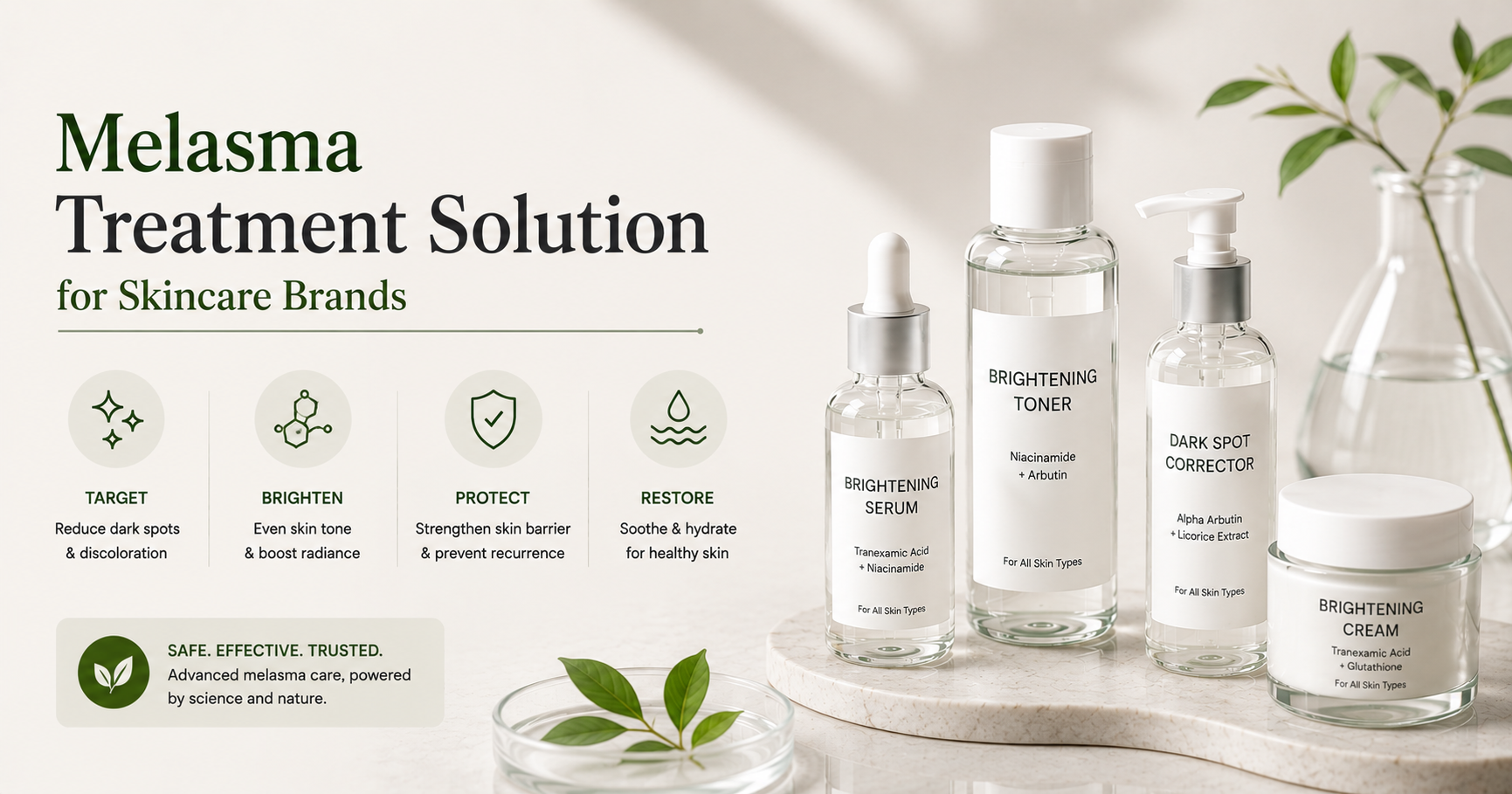
Melasma Treatment Solution for Skincare Brands
1. What is Melasma?
Melasma is a chronic hyperpigmentation disorder characterized by symmetrical, brown to gray-brown patches that typically appear on the face. Unlike post-inflammatory hyperpigmentation or age spots, melasma involves deeper melanin deposits in both the epidermal and dermal layers of the skin.
The condition predominantly affects women (90% of cases) and is most common among individuals with Fitzpatrick skin types III–VI. Geographic markets with high UV exposure and hormonal contraceptive usage—including Southeast Asia, the Middle East, Latin America, and Southern Europe—represent significant commercial opportunities for melasma-focused skincare brands.
Understanding melasma’s distinctive pathology is essential for product developers. This condition requires formulations that address multiple melanogenic pathways simultaneously, making it a premium product category with strong consumer demand and higher price tolerance.
2. Causes of Melasma (Hormonal & UV Factors)
Hormonal Triggers
Hormonal fluctuations are the primary internal trigger for melasma development. Pregnancy-related melasma (chloasma) affects 50-70% of pregnant women, while oral contraceptives and hormone replacement therapy significantly increase melasma risk.
Estrogen and progesterone stimulate melanocyte activity through upregulation of tyrosinase and other melanogenic enzymes. This hormonal mechanism explains why melasma often appears during pregnancy, subsides postpartum, and recurs with subsequent hormonal changes.
For skincare brands, this creates a defined target demographic: women of reproductive age, pregnant and postpartum consumers, and those using hormonal medications. Marketing messaging and product positioning should acknowledge these life stages.
UV Exposure
Ultraviolet radiation is the most significant external trigger for melasma activation and recurrence. Both UVA and UVB rays stimulate melanocytes directly while generating reactive oxygen species that amplify pigmentation pathways.
Critically, visible light (particularly blue light) and infrared radiation also contribute to melasma, especially in darker skin types. Standard UV filters alone provide insufficient protection, which has important implications for sunscreen formulation.
Without daily broad-spectrum photoprotection, melasma treatment products show limited efficacy regardless of active ingredient quality. This makes sunscreen an essential—and profitable—component of any melasma product system.
Other Contributing Factors
Genetic predisposition plays a significant role, with 40-50% of melasma patients reporting family history. This genetic component influences both susceptibility and treatment response, affecting how brands should position efficacy claims.
Heat exposure from cooking, saunas, or hot climates can trigger melasma independent of UV exposure. Inflammatory processes and skin barrier disruption also worsen pigmentation, highlighting the need for gentle, anti-inflammatory formulations.
Product developers should consider these multi-factorial triggers when designing melasma treatment systems rather than single-product solutions.
3. Challenges in Treating Melasma
Melasma presents unique formulation and marketing challenges that differentiate it from other hyperpigmentation conditions. The condition’s chronic, relapsing nature requires consumer education and realistic efficacy timelines—typically 8-12 weeks minimum for visible results.
Recurrence risk is the primary treatment challenge. Even after successful lightening, melasma returns in 50-90% of cases without ongoing maintenance. This creates an opportunity for subscription models and repeat purchase strategies but demands formulations that are safe for long-term daily use.
Deep pigmentation layers complicate treatment effectiveness. While epidermal melasma responds relatively well to topical treatments, dermal melasma (melanin deposits in the deeper dermis) shows poor response to conventional brightening agents. Multi-mechanism formulations that address both inflammation and melanin synthesis perform better than single-ingredient products.
Sensitivity issues are common, particularly with traditional treatments like hydroquinone or high-percentage retinoids. Consumers with melasma often have reactive skin that worsens with aggressive actives, causing inflammation that paradoxically deepens pigmentation.
For skincare brands, these challenges indicate that gentle, barrier-supporting formulations with synergistic active combinations outperform high-concentration single-ingredient products. Product systems that combine treatment, maintenance, and protection deliver superior results and customer satisfaction.
Private label and OEM buyers should prioritize manufacturers with experience in stabilizing sensitive actives and formulating for compromised skin barriers—this expertise directly impacts product performance and brand reputation.
4. Effective Ingredients for Melasma Treatment
Tranexamic Acid
Tranexamic acid has emerged as one of the most effective ingredients for melasma treatment, with clinical evidence supporting both oral and topical use. The mechanism works through inhibiting the plasminogen/plasmin system, which reduces prostaglandin production and subsequently decreases tyrosinase activity.
Unlike traditional tyrosinase inhibitors, tranexamic acid addresses the inflammatory component of melasma—a critical advantage since inflammation perpetuates pigmentation. Clinical studies demonstrate 2-5% topical tranexamic acid produces significant melasma improvement with minimal irritation.
Formulation considerations:
- Stable in pH 4.5-6.5 formulations
- Compatible with niacinamide and azelaic acid
- Can be formulated in serums, essences, and creams
- Typical usage concentration: 2-5%
For skincare brands, tranexamic acid offers a premium positioning opportunity as a science-backed alternative to hydroquinone. The ingredient appeals to informed consumers seeking effective, non-irritating melasma solutions.
Niacinamide
Niacinamide (vitamin B3) addresses melasma through multiple complementary mechanisms: reducing melanosome transfer from melanocytes to keratinocytes, providing antioxidant protection, and strengthening the skin barrier.
The ingredient shows particular efficacy in melasma when used at 4-5% concentrations, with studies demonstrating comparable results to 4% hydroquinone but with superior tolerability. Niacinamide’s anti-inflammatory properties also reduce the irritation potential of other actives when used in combination formulations.
Formulation advantages:
- Highly stable across pH ranges
- Excellent compatibility with most actives
- Suitable for all skin types including sensitive
- Supports long-term barrier health
- Typical usage concentration: 4-10%
From a product development perspective, niacinamide serves as an ideal foundation ingredient for melasma systems. Its barrier-supporting properties enable higher tolerance of other actives, while its broad benefits justify inclusion across multiple product formats—serums, moisturizers, and sunscreens.
Azelaic Acid
Azelaic acid offers dual benefits for melasma treatment: tyrosinase inhibition with anti-inflammatory and antibacterial properties. The ingredient specifically targets hyperactive melanocytes without affecting normally pigmented skin, reducing risk of unwanted lightening.
Clinical evidence supports 15-20% azelaic acid for melasma, though lower concentrations (10%) combined with other actives also demonstrate efficacy. The ingredient’s gentle profile makes it suitable for sensitive skin and safe for long-term use—critical for melasma’s chronic management requirements.
Formulation considerations:
- Requires careful formulation to minimize grittiness
- pH-dependent stability (optimal pH 4-5)
- May cause mild tingling initially
- Synergistic with niacinamide and tranexamic acid
- Typical usage concentration: 10-20%
For private label development, azelaic acid formulations require experienced manufacturers who can address texture challenges while maintaining efficacy. Well-formulated azelaic acid products command premium pricing and strong customer loyalty.
Ingredient Synergy for Enhanced Efficacy
Melasma’s complex pathology responds best to multi-ingredient formulations that target different melanogenic pathways simultaneously. Effective combinations include:
Tranexamic acid + Niacinamide: Addresses inflammation and melanin transfer with excellent tolerability Azelaic acid + Niacinamide: Combines direct tyrosinase inhibition with barrier support Kojic acid + Niacinamide + Licorice extract: Triple-mechanism approach suitable for sensitive skin
Product developers should focus on formulations that deliver 3-4 complementary mechanisms rather than high concentrations of single ingredients. This approach produces superior results while minimizing irritation—a critical factor in melasma treatment adherence.
5. Formulation Strategies for Melasma Product Development
Alpha Arbutin
Alpha arbutin deserves specific attention as a safe, effective tyrosinase inhibitor particularly suited to melasma formulations. This hydroquinone derivative provides melanin synthesis inhibition without hydroquinone’s safety concerns, making it regulatory-compliant in markets where hydroquinone is restricted.
The ingredient demonstrates efficacy at 1-2% concentrations and shows excellent compatibility with other brightening actives. For brands targeting Asian and Middle Eastern markets where alpha arbutin has strong consumer recognition, this ingredient offers both functional and marketing advantages.
Vitamin C (L-Ascorbic Acid and Derivatives)
Vitamin C addresses melasma through antioxidant protection and tyrosinase inhibition, though formulation stability presents challenges. L-ascorbic acid (10-20%) offers maximum potency but requires pH below 3.5 and protective packaging.
Stable derivatives like sodium ascorbyl phosphate (3-5%), ascorbyl glucoside (2-5%), and 3-O-ethyl ascorbic acid (1-3%) provide easier formulation with reasonable efficacy. For melasma-focused products, combining stable vitamin C derivatives with other actives often delivers better results than high-concentration L-ascorbic acid alone.
Botanical Extracts with Clinical Support
Several botanical ingredients demonstrate melanin-inhibiting and anti-inflammatory properties relevant to melasma:
- Licorice extract (glabridin): Tyrosinase inhibition and anti-inflammatory benefits at 0.5-2%
- Mulberry extract: Tyrosinase inhibition through active compound mulberroside F
- Grape seed extract: Proanthocyanidins provide antioxidant protection and melanin reduction
- Green tea extract (EGCG): Anti-inflammatory and antioxidant properties support overall pigmentation reduction
These botanicals appeal to consumers seeking natural ingredients and allow “clean beauty” positioning while maintaining clinical efficacy. When combined with proven actives like niacinamide or tranexamic acid, botanical ingredients add marketing differentiation without compromising performance.
6. Recommended Product Formats for Melasma Treatment Lines
Serums (High-Concentration Active Delivery)
Serums represent the ideal format for delivering high concentrations of melasma-fighting actives. The lightweight texture enables superior ingredient penetration while allowing multiple product layering—essential for comprehensive melasma management.
Effective serum formulations:
- Morning brightening serum: Vitamin C derivative (3-5%) + niacinamide (5%) + licorice extract (1%) + antioxidants
- Evening treatment serum: Tranexamic acid (3-5%) + alpha arbutin (2%) + niacinamide (5%)
- Intensive treatment serum: Azelaic acid (10-15%) + niacinamide (4%) for stubborn pigmentation
Serums command premium pricing and high perceived value, making them profitable anchor products for melasma lines. Product developers should consider airless pump packaging to preserve active stability and enhance user experience.
Creams (Barrier Repair + Maintenance Treatment)
Treatment creams serve dual purposes: delivering active ingredients while supporting barrier repair. This format suits consumers who prefer simplified routines or have sensitivity concerns with multiple product layering.
Effective cream formulations:
- Night repair cream: Tranexamic acid (2-3%) + niacinamide (5%) + ceramides + peptides
- Daily protective cream: Niacinamide (5%) + alpha arbutin (1%) + antioxidants + lightweight hydration
- Intensive treatment cream: Azelaic acid (10%) + niacinamide (4%) + barrier-supporting lipids
For private label buyers, cream formulations offer texture customization opportunities—from gel-creams for humid climates to richer textures for dry environments. Regional adaptation increases market relevance and consumer satisfaction.
Sunscreens (Critical for Melasma Management)
Sunscreen is non-negotiable in melasma treatment and represents a repeat-purchase necessity. However, standard UV protection proves insufficient—melasma-specific sunscreens must address visible light and infrared radiation that trigger pigmentation in darker skin types.
Formulation requirements for melasma-focused sunscreens:
- Broad-spectrum SPF 50+ (PPD/PA++++ for UVA protection)
- Iron oxides (3-5%) to block visible light
- Antioxidants (vitamin E, niacinamide) for infrared protection
- Elegant textures without white cast (critical for darker skin tones)
- Tinted options for immediate coverage and enhanced visible light protection
Sunscreens offer excellent margin opportunities when positioned as specialized melasma protection rather than general sun care. Education-focused marketing explaining visible light protection justifies premium pricing.
For OEM/private label development, mineral-organic hybrid formulations with iron oxides provide superior melasma protection while addressing the texture challenges of mineral-only sunscreens.
Cleansers and Supporting Products
While not primary treatment products, gentle cleansers and supporting products complete a melasma system and increase average order value.
Complementary products:
- Gentle cleanser: pH-balanced (5.0-6.0), sulfate-free, with barrier-supporting ingredients
- Exfoliating toner: Low-percentage AHA/PHA (5-8%) for improved active penetration without irritation
- Hydrating essence: Hyaluronic acid + niacinamide for prep and barrier support
Complete product systems increase brand loyalty, enable higher total purchase values, and provide comprehensive solutions that improve treatment outcomes.
7. Day vs Night Melasma Treatment Routines
Effective melasma management requires differentiated day and night protocols that maximize active delivery while ensuring protection and barrier support.
Morning Routine Structure
Focus: Protection, prevention, and antioxidant defense
- Gentle cleanser (pH 5.0-6.0)
- Antioxidant serum with vitamin C derivative (3-5%) + niacinamide (5%)
- Lightweight moisturizer with barrier-supporting ingredients
- Melasma-specific sunscreen (SPF 50+, iron oxides, broad-spectrum)
Morning formulations should prioritize stability, lightweight textures, and compatibility with sunscreen. Avoid photosensitizing ingredients or heavy oils that compromise sunscreen adhesion.
Evening Routine Structure
Focus: Active treatment, repair, and melanin inhibition
- Gentle cleanser (thorough sunscreen removal)
- Treatment serum with tranexamic acid (3-5%) + alpha arbutin (2%) + niacinamide (5%)
- Treatment cream with additional actives (azelaic acid or retinoid alternatives) + barrier repair lipids
- Optional intensive treatment for stubborn areas (higher concentration actives)
Evening formulations can incorporate higher active concentrations and less stable ingredients without photosensitivity concerns. This is optimal timing for ingredients like tranexamic acid, azelaic acid, and retinoid alternatives.
Product System Strategy for Brands
Rather than developing single “melasma cream” products, successful brands create complete treatment systems that guide consumers through appropriate day/night protocols. This approach delivers:
- Better clinical outcomes through appropriate active timing and combinations
- Higher average order values through multi-product purchases
- Improved customer retention via comprehensive routines
- Clear differentiation from single-product competitors
- Educational content opportunities that establish brand authority
For private label buyers, system-based product lines justify higher MOQs across multiple SKUs while creating stronger brand positioning. OEM manufacturers experienced in routine-based development provide valuable guidance on product synergies and consumer journey mapping.
Dark Spot Research Center
You May Also Like


Develop Your Skincare Products
Looking to launch your own skincare line? Our experienced team can support you through every stage of the development process. From custom formulation and ingredient selection to packaging and full-scale manufacturing, we provide complete OEM and private label solutions tailored to your brand.
